Introduction
Every old city that travellers love has a reason for being where it is. Very few of them grew by accident. Most of them grew because traders stopped there, rested there, stored their goods there, and paid taxes there. Over hundreds of years, the roads that carried silk, spices, gold, salt and ideas also carried the wealth that built mosques, churches, palaces, markets and harbours. When you walk through Samarkand, Venice or Malacca today, you are walking through the results of trade.
This guide explains how the great old trade routes shaped the cities that travellers still visit. It looks at the Silk Road, the spice routes, the incense routes and the trading cities of Europe, and it shows what you can still see in each place. If you enjoy visiting historic cities, understanding the trade behind them will make every street and market feel more alive.
What trade routes actually were
A trade route was not a single road with a name on a map. It was a network of paths, rivers, sea lanes and mountain passes that connected producers with buyers. Caravans of camels crossed deserts. Ships followed monsoon winds across oceans. Merchants changed goods at every stop, so a bolt of silk from China might pass through ten hands before it reached a buyer in Rome or Baghdad.
Cities grew at the places where routes met, where goods had to be unloaded, where taxes were collected, or where travellers needed food, water and safety. A good water supply, a strong wall and a fair ruler could turn a small oasis into a rich city within a generation. A war, a new sea route or a dried up river could empty the same city just as fast.
The Silk Road and the cities of Central Asia
The Silk Road was the most famous trading network in history. It linked China with Central Asia, Persia, Arabia and Europe for more than a thousand years. Its cities are still among the most rewarding places a traveller can visit.
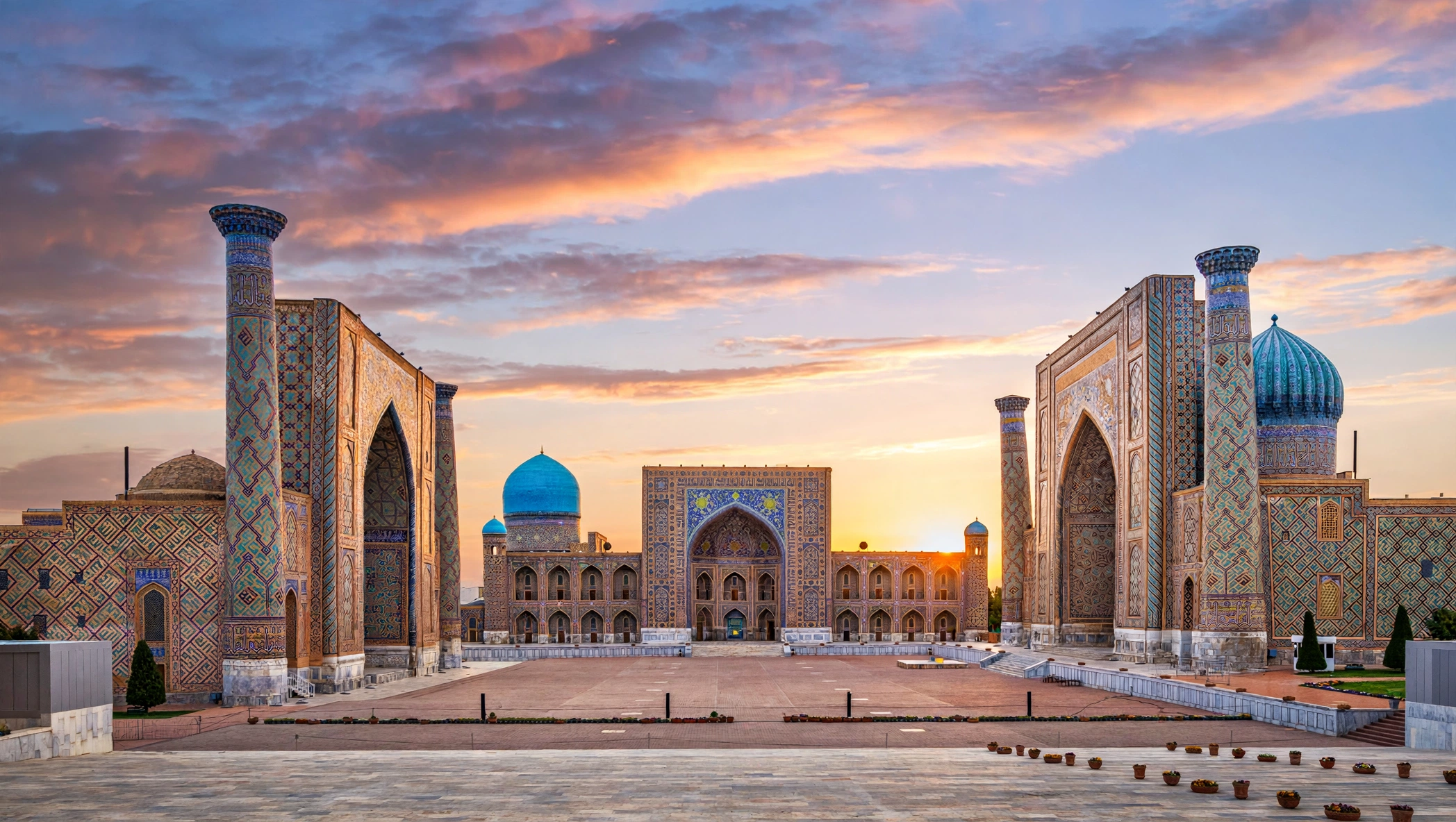
Samarkand, in present day Uzbekistan, was the great meeting point of the road. Traders from China, India, Persia and Europe met in its markets. The wealth they brought paid for the Registan, the famous square with three grand madrasas that still dominates the city. Walk through the Registan at sunset and you can see why merchants were happy to spend their profits on beauty. The blue tiles, the tall arches and the open square were all built to impress visitors and to show the power of the rulers who controlled the trade.
Bukhara, also in Uzbekistan, grew rich as a centre of learning and trade. Its old town is a maze of domes, minarets and covered markets. The trading domes, where money changers, silk sellers and spice merchants worked, still stand. You can walk from one dome to another in a few minutes, and each one tells you what was bought and sold there.
Kashgar, in western China, sat where the northern and southern routes around the Taklamakan Desert joined again. It was the last great market before the long road east to China, and the first for traders coming the other way. Its Sunday market is still famous, and its old town keeps the feel of a city built for caravans.
The spice routes and the ports of the sea
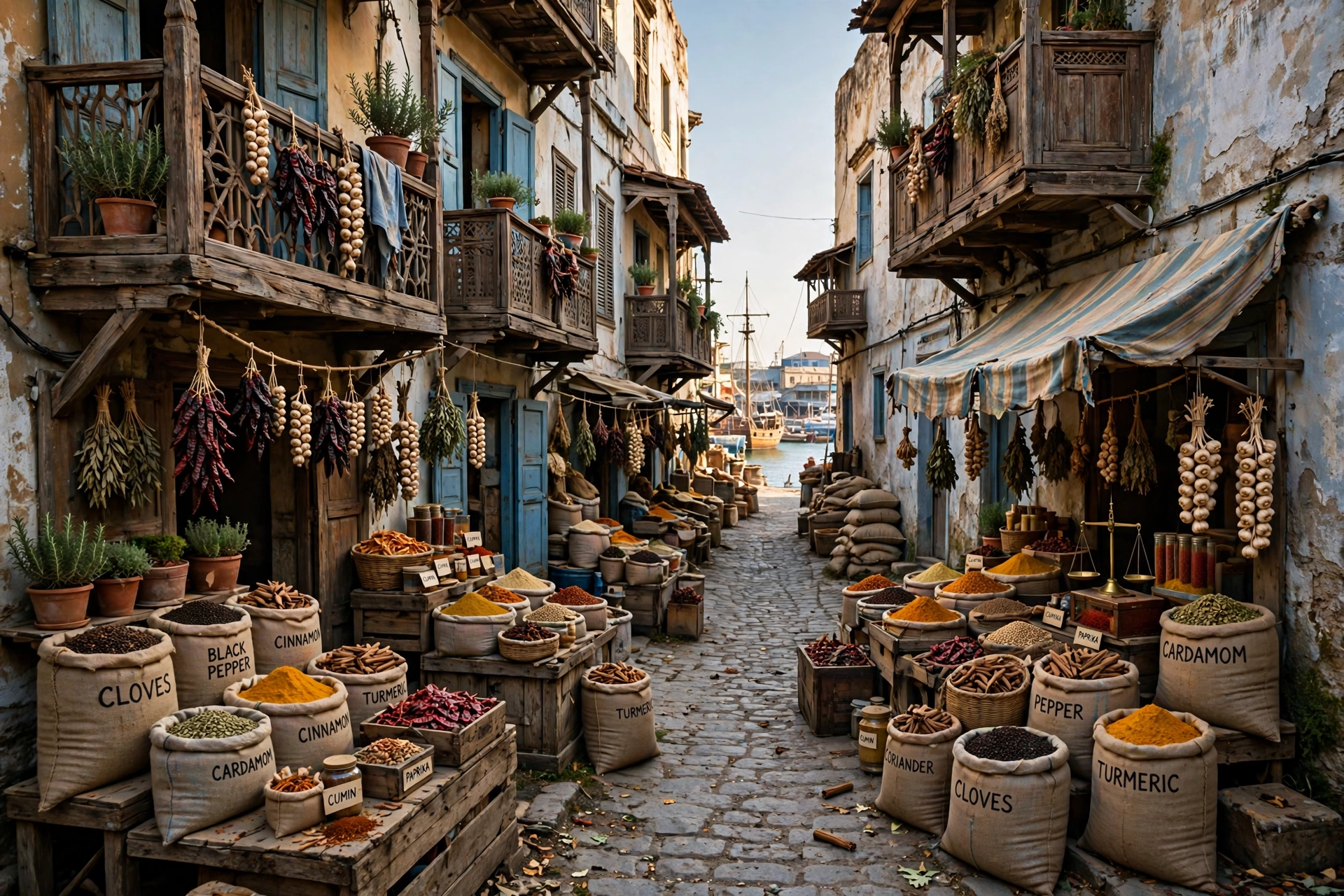
While camels crossed Central Asia, ships carried spices across the Indian Ocean. Pepper, cinnamon, cloves and nutmeg were worth more than gold in Europe, and the ports that handled them became rich and mixed.
Malacca, in present day Malaysia, controlled the narrow strait between the Indian Ocean and the South China Sea. Every ship sailing between India and China had to pass it. Traders from Arabia, India, China and later Europe settled there, and the city still shows that mix in its streets, food and buildings. The old town, the river and the hill with its ruined church are all part of that trading story.
Kochi, on the coast of India, was another great spice port. Pepper from the hills behind it was loaded onto ships bound for Arabia and Europe. The city still has its old Chinese fishing nets, its spice warehouses and its mix of churches, synagogues and mosques. Few places show so clearly how trade brought different peoples to live side by side.
Zanzibar, off the coast of East Africa, grew rich on cloves, ivory and the monsoon trade with Arabia and India. Stone Town, its old quarter, is a maze of narrow streets, carved wooden doors and old merchant houses. The doors alone tell the story, because traders from Arabia, India and Africa each brought their own style of carving.
The incense and gold routes of Africa and Arabia
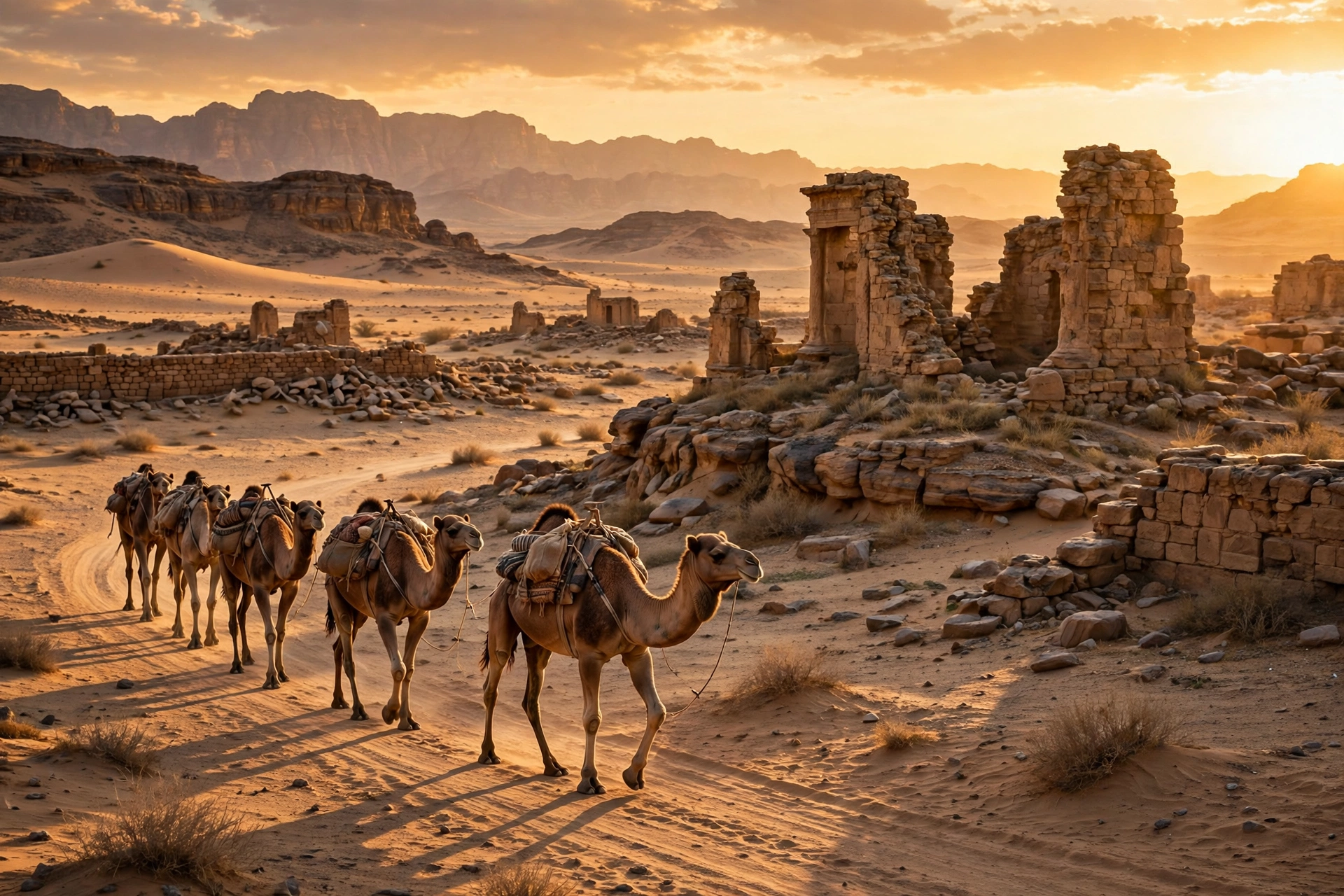
Not all trade was about silk and spices. In Arabia and Africa, incense, gold and salt were just as important. The incense route ran from the frankincense trees of southern Arabia up through the desert to the markets of the Mediterranean. Cities like Petra, in present day Jordan, grew rich by taxing and protecting the caravans. Petra’s famous Treasury, carved into red rock, was built with incense money, and the whole city is a reminder that a desert crossroads could become one of the wonders of the world.
Across the Sahara, salt and gold moved in opposite directions. Salt from the desert mines went south, and gold from West Africa went north. Timbuktu, in present day Mali, became famous as a centre of trade and learning. Its mosques and old libraries still stand, and its name alone still suggests a faraway place of wealth and knowledge.
Marrakech, in Morocco, grew at the northern end of the trans-Saharan routes. Its great square, Jemaa el-Fnaa, began as a market where traders from the desert met traders from the Mediterranean. It is still a market today, and the noise, the food stalls and the crowds are not very different from what a trader would have found hundreds of years ago.
The trading cities of Europe
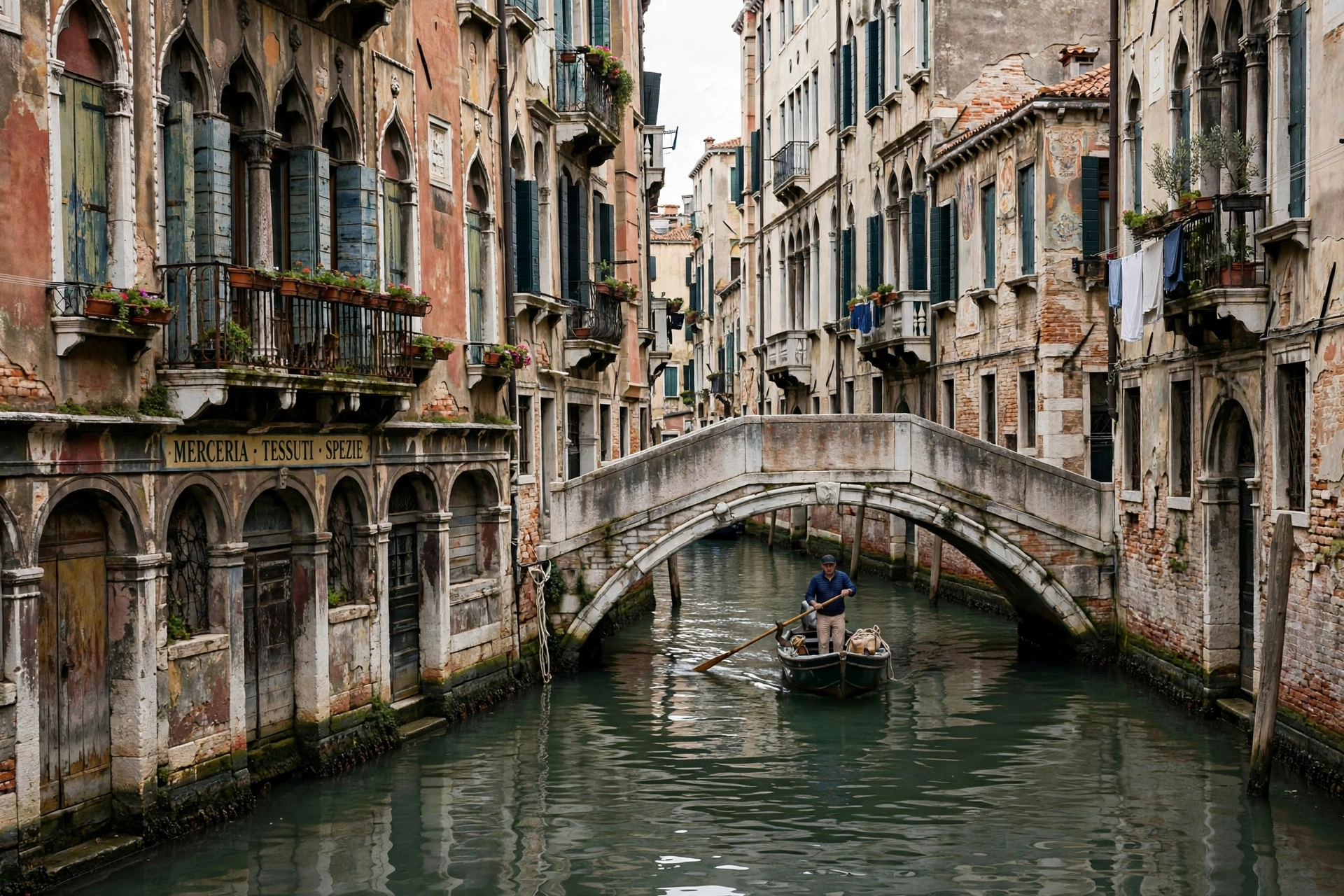
Europe had its own trading cities, and they shaped the continent in the same way. Venice, built on a lagoon in Italy, became rich by trading with the East. Its palaces, its canals and its great church of St Mark were all paid for by trade. The city had no farmland of its own, so everything it became came from buying, selling and shipping.
Bruges, in present day Belgium, was one of the great trading cities of northern Europe. Wool from England, wine from France and goods from the Mediterranean all passed through its canals. Its medieval centre, with its belfry, its market square and its old merchant houses, is one of the best preserved trading cities in Europe.
Lubeck, in northern Germany, led the Hanseatic League, a group of trading cities that controlled trade around the Baltic and North Seas. Its great Holsten Gate, its salt warehouses and its old town show how a city could grow rich on salt, herring and timber.
What travellers can still see today
The most rewarding part of visiting these cities is that the trade is still visible. You do not need a history degree to see it. Look for the old markets, the caravanserais where traders slept, the warehouses by the harbour, the grand houses of merchants and the religious buildings that trade paid for. In Samarkand, stand in the Registan. In Venice, walk along the Grand Canal and look at the palaces. In Malacca, walk the old streets near the river. In each place, the buildings are the receipts of old trade.
Food is another clue. Trading cities have mixed food, because traders brought their recipes with them. The spices in the food of Kochi, the noodles in the markets of Kashgar, the pastries of Marrakech and the seafood of Venice all tell the same story. Eating well in an old trading city is a history lesson in itself.
How to plan a visit to an old trading city
Start with one route, not all of them. Pick the Silk Road, the spice routes or the European trading cities, and choose two or three cities on that route. That way you can see how the same trade shaped different places.
Read a little before you go. Knowing why a building was built makes it far more interesting than simply looking at it. A short guide to the route, or even a good article, will help you spot the caravanserai, the old market and the merchant houses that other visitors walk past.
Walk the old town on foot. Trading cities were built for walking and for markets, not for cars. The best parts are usually the narrow streets, the old squares and the harbour or river front. Take your time, sit in a cafe in the old market, and watch the city work.
Finally, check practical details before you travel. Visa rules, seasons and transport change, and some of these cities are far from major airports. Plan your transport and your stay in advance, and confirm opening times for the places you most want to see.
Conclusion
Old trade routes did more than move goods. They built cities, mixed cultures, spread religions and ideas, and left behind some of the most beautiful places on earth. Samarkand, Venice, Malacca, Petra and Timbuktu were not built by accident. They were built by trade, and trade is still written into their streets, their markets and their food.
The next time you visit a historic city, ask yourself what was bought and sold there. The answer will usually explain why the city looks the way it does, and it will make your visit richer than any list of sights alone.
Frequently asked questions
What was the Silk Road?
The Silk Road was a network of trading routes linking China with Central Asia, Persia, Arabia and Europe. It carried silk, spices, glass, paper, ideas and religions, and it helped the cities along it grow rich.
Which old trading city is best for a first visit?
Venice is a good first choice because it is easy to reach and its trading history is visible everywhere. Samarkand is a good choice for travellers who want a classic Silk Road city, and Malacca suits travellers who enjoy ports and mixed cultures.
Are these old trading cities still trading cities today?
Many of them still trade, but most now earn more from tourism than from old caravan or spice trade. Their markets, harbours and old quarters still work as markets and meeting places, even if the goods have changed.