Introduction
Few cities have changed their name and their rulers as often as Istanbul. It began as Byzantium, a Greek trading town. It became Constantinople, the capital of the Roman and Byzantine empires. Then it became Istanbul, the capital of the Ottoman Empire. Each age left its buildings, its streets and its food, and all of them are still standing in the old city today. This guide follows Istanbul through the centuries, so you can read the city like a book, one layer at a time.
Byzantium: the Greek trading town
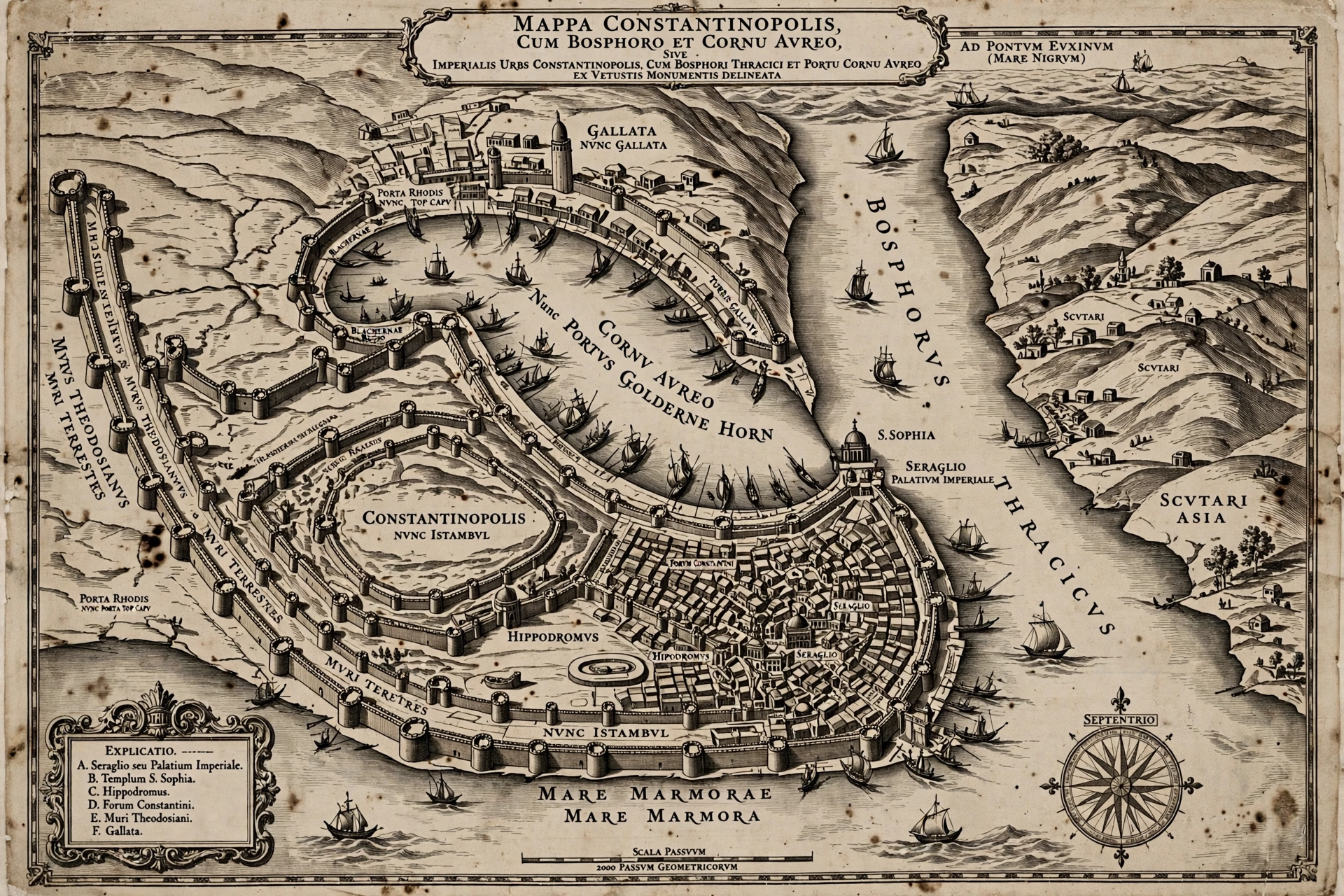
The story begins around 660 BC, when Greek settlers from Megara founded a town called Byzantium on a narrow strait between Europe and Asia. The place was chosen for trade. Ships passing between the Black Sea and the Mediterranean had to go through this strait, and the town grew rich by taxing them and selling fish from its waters. The old town stood on a hill where the Topkapi Palace stands today, and its walls followed the line of the land. Little of Greek Byzantium survives above ground, but its position explains everything that came after. Whoever held this city controlled the trade between two seas and two continents. That is why emperors and sultans fought over it for two thousand years.
Constantinople: the city of the emperors
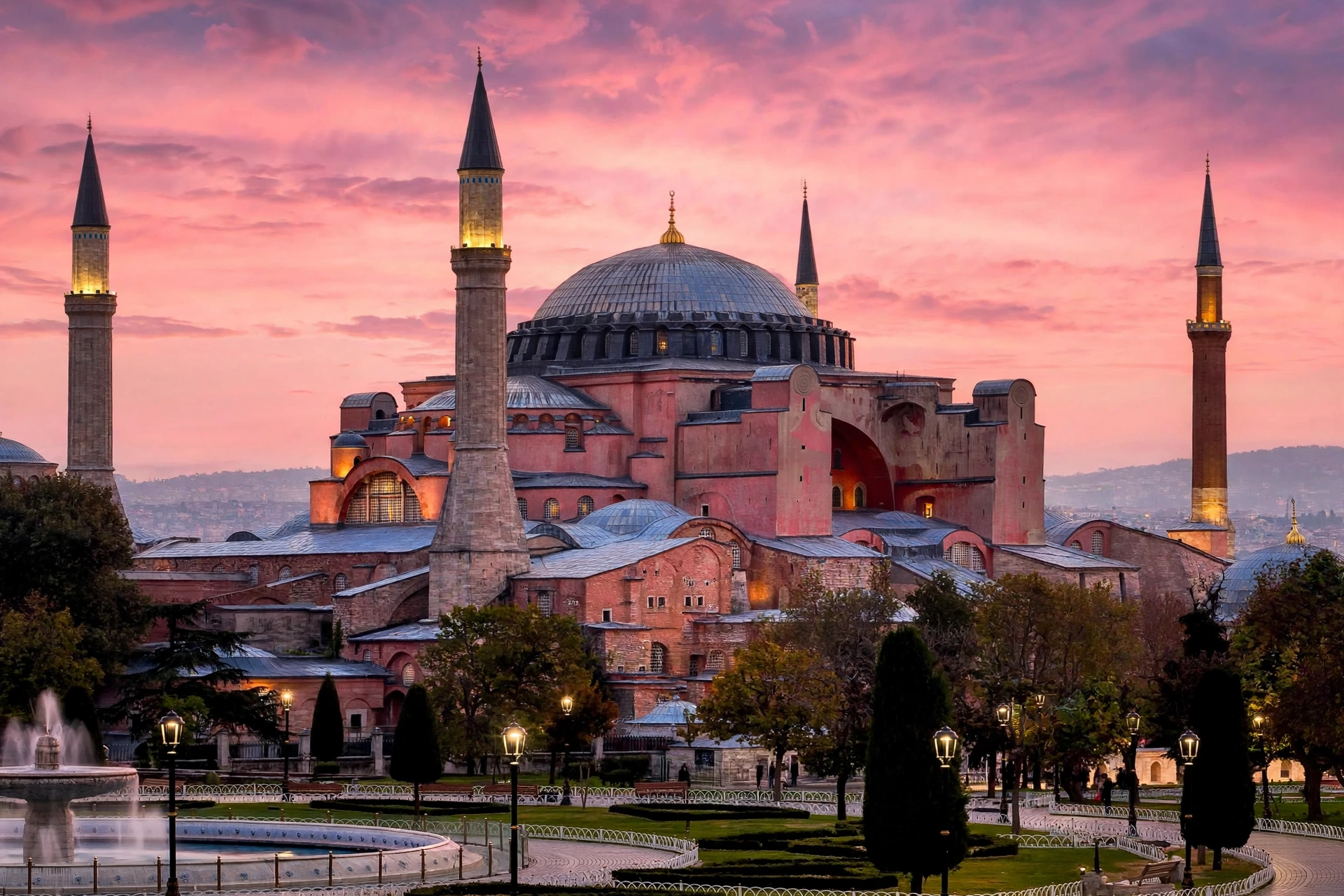
In 330 AD, the Roman emperor Constantine rebuilt the city and made it his capital, calling it Constantinople, the city of Constantine. It became the centre of the eastern Roman Empire, later called the Byzantine Empire. For more than a thousand years, it was one of the largest and richest cities in the world, with great churches, palaces, markets and the famous land walls that protected it from attack. The greatest building of this age is the Hagia Sophia. Built in the sixth century under the emperor Justinian, it was the largest church in the world for almost a thousand years. Its great dome, which seems to float above the building, was a wonder of engineering. When you stand inside it today, you can still feel the scale of the empire that built it. Walk the old land walls, built in the fifth century, and you will see how the city defended itself. Walk the old main street, the Mese, now the Divan Yolu, and you are walking the road that emperors used for their processions. The Hippodrome, where chariot races were held, is now a square, but its Egyptian obelisk and its serpent column still stand where they were placed fifteen hundred years ago.
Istanbul: the Ottoman capital
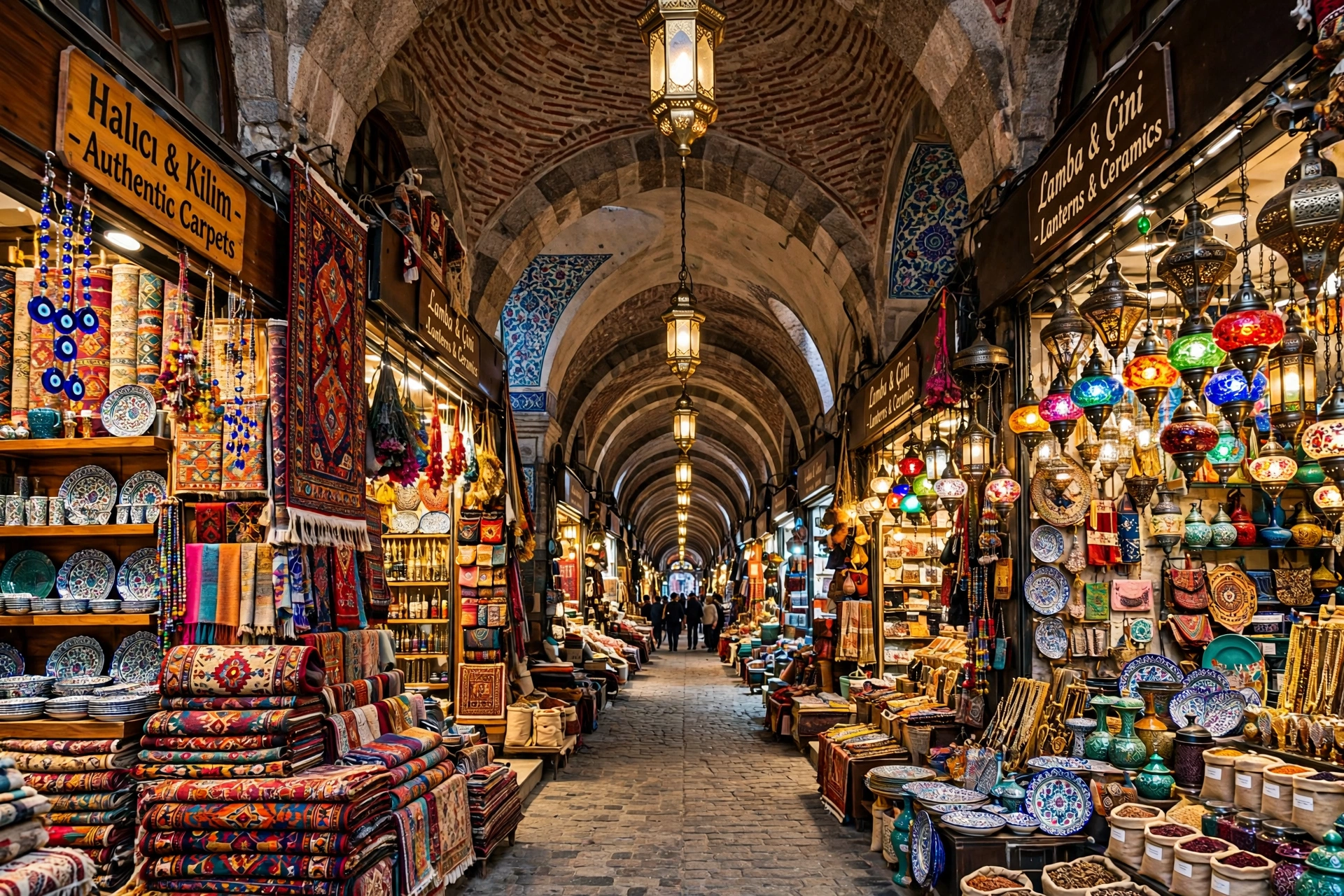
In 1453, the Ottoman sultan Mehmed II conquered the city after a long siege, and Constantinople became Istanbul, the capital of the Ottoman Empire. The sultans built mosques, palaces, baths and covered markets that changed the face of the city. The Hagia Sophia became a mosque, and minarets rose beside its dome. The Blue Mosque, built in the early seventeenth century, answered it across the square with its six minarets and its blue tiles. The Topkapi Palace, home of the sultans for four hundred years, sits on the old hill of Byzantium. Its courtyards, kitchens and harem tell the story of court life, while its treasury holds the jewels and relics of the empire. Below the palace, the Grand Bazaar grew into one of the largest covered markets in the world, with thousands of shops selling carpets, gold, spices and leather. It is still a working market today, and walking through it is like walking through the economy of the empire.
Layers in one street
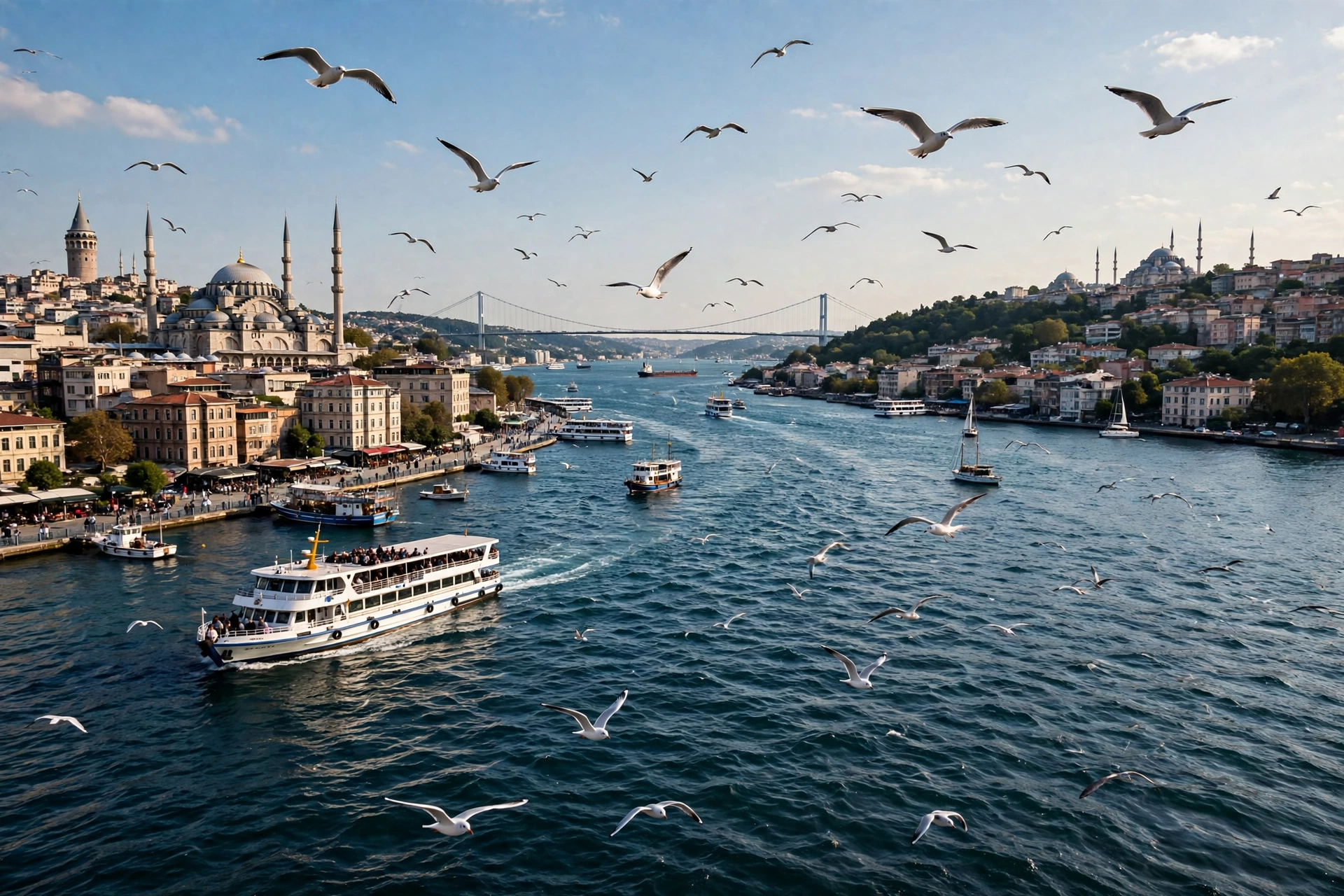
The best way to understand Istanbul is to walk one street and count the layers. In the old city, a Roman column stands beside an Ottoman mosque, a Byzantine church is now a museum, and a nineteenth century tram runs past them all. The food tells the same story. Fish from the Bosphorus, bread from Ottoman bakeries, and coffee that came to the city from Yemen in the sixteenth century are all still served in the same streets. Start your walk at the Hagia Sophia and the Blue Mosque, then walk down to the Grand Bazaar and the Spice Market. Cross the Galata Bridge to the other side, where the Galata Tower, built by the Genoese in the fourteenth century, looks back over the old city. Each stop is a different century, and the whole walk takes only a few hours.
How to plan your visit
Spend at least two days in the old city. One day for the Hagia Sophia, the Blue Mosque, the Topkapi Palace and the Hippodrome, and another day for the Grand Bazaar, the Spice Market and the walk across the Galata Bridge. The old city is best on foot, and its streets are steep in places, so wear good shoes. Buy tickets in advance for the Hagia Sophia and the Topkapi Palace, because the queues can be long. The mosques are free to visit but are closed to visitors during prayer times, so plan around them. The bazaars are open every day except Sunday for the Grand Bazaar, and they are busiest in the afternoon.
Conclusion
Istanbul is not one city but several cities built on top of each other. Byzantium gave it its position, Constantinople gave it its churches and walls, and the Ottoman Empire gave it its mosques, palaces and bazaars. All of them are still there, within walking distance, in the same old streets. Walk slowly, look up at the domes and minarets, and let the centuries speak for themselves.
Frequently asked questions
Q: What is the difference between Byzantium, Constantinople and Istanbul?
A: They are the same city under different names and rulers. Byzantium was the Greek town, Constantinople was the Roman and Byzantine capital, and Istanbul was the Ottoman capital and the modern name.
Q: Can I visit the Hagia Sophia today?
A: Yes. The Hagia Sophia is open to visitors as a mosque. It is free to enter outside prayer times, and visitors should dress modestly and remove their shoes inside.
Q: How many days do I need in the old city of Istanbul?
A: Two full days are enough for the main sights: the Hagia Sophia, Blue Mosque, Topkapi Palace, Hippodrome, Grand Bazaar and Spice Market, with a walk across the Galata Bridge.